Jiangxi Silinco Co., Ltd. 120,000-ton Organic Acids Project with Supporting p-tert-Octylphenol and 27,000-ton Polyether Products
Environmental Impact AssessmentSecondPublic Notice
Our company has commissioned JiangxiShengyou Environmental Protection Technology Co., Ltd. to prepare the Environmental Impact Assessment Report of the 120,000-ton Organic Acids Project with Supporting p-tert-Octylphenol and 27,000-ton Polyether Products of Jiangxi Silinco Co., Ltd.. In accordance with the regulatory requirements of the Measures for Public Participation in Environmental Impact Assessment and other normative requirements, the public participation matters of this project are hereby announced as follows:
I. Name and Overview of the Construction Project
Project name: 120,000-ton Organic Acids Project with Supporting p-tert-Octylphenol and 27,000-ton Polyether Products of Jiangxi Silinco Co., Ltd.
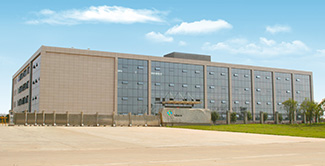
Construction site: within the existing site of Baishui Lake Industrial Park, Nanchang Economic and Technological Development Zone (E115°53'35, N28°46'56")
Nature of construction: Renovation and expansion
Project overview: Total project investment: 168,202.63 ten thousand yuan, of which the environmental protection investment is200 ten thousand yuan, accounting for0.12% of the total investment. The product plan and scale of this project are: annual output of 20,000 tons of isononanoic acid, 2,500 tons of n-valeric acid, 2,500 tons of isovaleric acid,20,000 tons of isooctanoic acid, 15,000 tons of heptanoic acid, 20,000 tons of polyvinyl ether and other main products, as well as by-products includinghexane4,240 tons,triisobutylene556.78 tons, diethyl ether12.8 tons, etc..
The plant site of this project covers an area of 18.68 ten thousand square meters. This renovation and expansion project requires no additional land. The existing hydroformylation unit area, oxidation unit area, acid distillation unit area, aldehyde distillation unit area, andCO,H2 compression plant will be renovated and expanded; the methanol cracking unit area will be expanded; a new distillation unit area will be built; the existing R90 Workshop No. 1 and R90 Workshop No. 2 will be relied upon;the existing tank farm will be relied upon, with some new hazardous chemical storage tanks added; the existing warehouse will be relied upon; and the existingenvironmental protection works (tail gas incineration boiler, wastewater treatment station, accident emergency pool, initial rainwater pool) will be relied upon.
The project adds 120 new employees; the four-shift three-rotation system is implemented. The annual operating time is 7200 hours, with 300 production days per year.
II. Possible Environmental Impacts of the Construction Project
During the construction period of this project, the main impacts are the dust, noise, muck and construction waste, domestic sewage and domestic waste generated by activities such as earthwork excavation, structural construction, equipment installation and decoration. The impact of the operation period on the environment is mainly the waste gas, wastewater and solid waste generated in the production process of the project. Among the waste gas pollution sources of this project, the organized process waste gas is mainly theNOX,SO2,TVOC,non-methane total hydrocarbons,particulates,methanol, etc.generated by the production process, and the unorganized waste gas is mainlyTVOC,methanol, etc.; the discharged wastewater of this project is process wastewater and domestic sewage; the solid waste is mainlydistillation residues,filter residues,spent catalysts,spentadsorbents,waste packaging barrels/bags,sludge from the wastewater treatment station,waste heat transfer oiland domestic waste, etc. After the implementation of the project, effective measures will be takento strengthen management, and prevent and mitigate environmental pollution.
III. Requirements for Countermeasures and Measures to Prevent or Mitigate Adverse Environmental Impacts
(1) Analysis of pollution sources during the construction period
During the construction of the project, activities such as earthwork excavation, structural construction, equipment installation and decoration are required, which will generate dust, noise, muck and construction waste, domestic sewage and domestic waste, and will cause certain impacts on the surrounding environment at that time.
(1) Dust
The main influencing factor of the construction period on the air environment is dust. Construction dust mainly comes from earthwork excavation, material storage and piling, the loading, unloading, handling and use of building materials, as well as the entry and exit of material transport vehicles. The dust is discharged in the form of unorganized emission. The amount of dust is related to many factors such as the site conditions, management level, degree of mechanization, construction season, soil quality and weather conditions.
(2) Wastewater
The wastewater during the construction period mainly comes from construction wastewater and domestic sewage of construction personnel. The construction production wastewater mainly consists of washing wastewater from concrete mixers. The washing wastewater of the mixers is all reused in production after sedimentation treatment and is not discharged. The daily life of construction personnel produces domestic sewage, whose main pollutants includeCOD,BODand ammonia nitrogen, etc., with relatively simple pollutant composition,which, after septic tank treatment, is discharged into the park wastewater treatment plant.
(3) Noise
The noise during the construction period mainly comes from construction machinery and transport vehicle noise. The construction machinery and equipment mainly include excavators, bulldozers, concrete mixers, cranes, etc. The above equipment all produces relatively loud noise during operation, and the noise is discharged in an intermittent manner.
(4) Solid waste
The solid waste generated during the construction of this project mainly includes muck generated by earthwork excavation, and construction waste generated by operations such as structural construction, equipment installation and decoration. In addition, the daily life of construction personnel will also generate some domestic waste.
During the construction period, the site leveling of the landfill and the excavation and backfilling of earthwork will generate a large amount of earthwork. After the balance of cut and fill within the site, a certain amount of surplus soil will be generated, which can be used as cover soil for the landfill operation. Domestic waste is entrusted to the sanitation department for disposal. Construction waste mainly includes a small amount of sand, soil, stones and cement generated during foundation treatment, building material loss and the decoration stage, all of which is used for paving the access roads, achieving full utilization.
(2) Pollution prevention and control measures during the operation period
1) Waste gas: the process waste gas is routed to the tail gas boiler for incineration treatment+18.2 m high exhaust stack (DA012);the oxidation reaction waste gas is routed to theRCO device for treatment and then discharged through the15m highDA011 exhaust stack; the flue gas of the heat transfer oil furnace and the boiler is discharged directly through a19.2 m high exhaust stack (DA015~DA017).The methanol, non-methane total hydrocarbonsandTVOC emissions in the organized waste gas comply with the emission limit requirements in Tables 1 and Table 2 of the Emission Standard of Volatile Organic Compounds - Part 2: Organic Chemical Industry (DB36/1101.2-2019);the sulfuric acid mist in the organized waste gas complies withthe Class II standard limits in Table 2 of the Integrated Emission Standard of Air Pollutants (GB16297-1996); the organizedNH3,H2S emissions comply with the standard requirements in the Emission Standards for Odor Pollutants (GB14554-93); the flue gasemission of the natural gas boiler and heat transfer oil furnacecomplies withthe gas-fired boiler standard limit requirements in Table 2 of the Emission Standard of Air Pollutants for Boilers (GB13271-2014); the unorganizedTVOCand non-methane total hydrocarbonscomply with the volatile organic compound concentration limit requirements at unorganized emission monitoring points in Table 3 of the Emission Standard of Volatile Organic Compounds - Part 2: Organic Chemical Industry (DB36/1101.2-2019); the unorganized methanol andsulfuric acid mistemissions comply with the unorganized emission monitoring concentration limits in Table 2 of the Integrated Emission Standard of Air Pollutants (GB16297-1996); the unorganizedorganic waste gas emissionswithin the plant area comply with the Standard for the Control of Unorganized Emissions of Volatile Organic Compounds (GB37822-2019).
2) Wastewater: according to thedrainage system of separating clean water from polluted water, the process wastewater, domestic sewage and initial rainwater are collected by the plant sewage pipe network and enter the wastewater treatment facilities. Rainwater is collected by the plant rainwater pipe network and discharged through the plant rainwater outlets.After being treated tomeet the influent water quality requirements ofBaishui Lake Wastewater Treatment Plant, the wastewater is discharged intoBaishui Lake Wastewater Treatment Plantfor further treatment up to the standard, and is then discharged into theGanjiang Riverthrough the general outfall of the park.
3) Noise control: the main noise sources arevarious pumps, vacuum units, fans, production equipment, etc..The noise pollution prevention measures mainly consist of installing vibration damping pads and sound-insulating doors and windows for buildings. Vibration isolation and damping elements are added to the foundations of equipment that generatesrelatively loud noise, such as fans, to increase the support area, control the vibration amplitude of the units, reduce the propagation of vibration, and silencers are installed accordingly; the noiseprevention measures can control the noise to meet the Class 3boundary noisestandard for industrial enterprises.
4) Solid waste: the solid waste of this project includesdistillation residues,filter residues, spent catalysts,spentadsorbents,waste packaging barrels/bags,waste heat transfer oil,sludge from the wastewater treatment stationanddomestic waste. All solid waste isproperly disposed ofand is not discharged.
IV. Key Points of the Environmental Impact Assessment Conclusion
The 120,000-ton Organic Acids Project with Supporting p-tert-Octylphenol and 27,000-ton Polyether Products of Jiangxi Silinco Co., Ltd.is located inthe existing site of Baishui Lake Industrial Park, Nanchang Economic and Technological Development Zone, and has received document support from the local government departments.
On the premise that the construction unit strengthens the operation period management in accordance with the requirements put forward by the assessment and implements various pollution prevention and control measures, it can be ensured that the enterprise's pollutants are discharged up to the standard, and the project will not have a significant impact on the surrounding environment.On the premise of satisfying the planning environmental impact assessment,from the perspective of environmental protection, the construction of this project is feasible.
V. Online Link to the Full Text of the Draft Environmental Impact Assessment Report for Comment and the Ways and Means to Access the Paper Report
The full text of the draft environmental impact assessment report for comment can be found at the link below: https://pan.baidu.com/s/1GSoLrjErjzoVjwmc7LEZ6A?pwd=gr43 Extraction code: gr43, and theways and means to access the paper report:the public may, within 10 days of this public announcement, contact the project unit or the environmental assessment unit by telephone, fax, letter, e-mail, etc., and the contact information is as follows:
Assessment unit: JiangxiShengyouEnvironmental Protection Technology Co., Ltd.;
Unit address:Hengsheng Science and Technology Park, Jiujiang Economic and Technological Development Zone;
Contact person: Mr. Pi
Contact phone: 0792-8159861
Unit website: http://www.jxsyhb.com.cn/
E-mail: jxsyhb2020@126.com
Construction unit:Jiangxi Silinco Co., Ltd.;
Unit address:within the existing site of Baishui Lake Industrial Park, Nanchang Economic and Technological Development Zone;
Contact person: Mr. Hu (General Manager)
Contact phone:13755632257
VI. Scope of the Public from Whom Opinions Are Solicited
The scope for soliciting public opinions on this project includes all residents and units within the scope of the possible environmental impacts caused by the project.
VII. Online Link to the Public Opinion Form
If you have any opinions or views on the project, you may fill in the public participation opinion form for the environmental impact assessment of the construction project in accordance with the format requirements of the link below. Please fill in suggestions and opinions related to the environmental impact of this project and environmental protection measures. (Note: according to the provisions of the Measures for Public Participation in Environmental Impact Assessment, opinions or appeals involving land acquisition and demolition, property, employment, etc., which are unrelated to the environmental impact assessment of the project, do not fall within the scope of public participation in the environmental impact assessment of the project.)
The public participation opinion form for the environmental impact assessment can be found at the link below:https://pan.baidu.com/s/1f-Ea1TDiSzyBQrQulFMVpg Extraction code: kd92
VIII. Ways and Means for the Public to Submit Opinions
If you have any opinions or views on the project, please provide feedback to the construction unit or the environmental impact assessment unit within 10working days from the date of the public announcement. You may fill in the public opinion form and send it by e-mail, or reflect your opinions and suggestions related to the environmental impact of the construction project by mailing a letter (subject to the postmark date). When submitting your opinions, please indicate the date of submission, your real name and valid contact information so that feedback can be provided as needed, and your personal information will not be disclosed to the public without permission (except as otherwise provided by laws and regulations).
IX. Start and End Time for the Public to Submit Opinions
10 working days from the date of the public announcement.
Jiangxi Silinco Co., Ltd.
2025-8-11