
Jiangxi Silinco Co., Ltd.
Public Notice of the Completion EnvironmentalSelf-AcceptanceOpinion of the Relocation and Expansion Project (Phase I)
On February 7, 2018, in accordance with the "Completion Environmental Protection Acceptance Monitoring Report of the Relocation and Expansion Project (Phase I) of Jiangxi Silinco Co., Ltd." and by reference to the "Interim Measures for the Acceptance of Completed Construction Projects for Environmental Protection", Jiangxi Silinco Co., Ltd., strictly following theAcceptance Monitoring Report,and in strict accordance with the relevant nationallaws and regulations, the technical specifications for the completion environmental protection acceptance of construction projects, and the requirements of the environmental impact assessment report of this project and the approving department's approval, organized in Nanchanga meeting for the self-acceptanceof the completion environmental protection of this project. Participants in the meeting included: Jiangxi Huazheng Environmental Testing Technology Co., Ltd. (the unit for compiling the acceptance report and conducting monitoring), Nanchang Zhongkang Environmental Protection Technology Co., Ltd. (the design and construction unit of the wastewater environmental protection facilities), and 4 invited experts. Staff of the Changbei Branch of the Nanchang Municipal Environmental Protection Bureauattended the meeting. During the meeting, an acceptance group was established. The members of the acceptance group conducted an on-site field inspection of the construction and operation of the environmental protection facilities of the project, listened to the report of the construction unit on the implementation of environmental protection in the construction project and the report of the monitoring unit on the completion environmental protection acceptance monitoring, reviewed and verified the relevant materials, and after earnest discussion formed acceptanceopinions, and put forward acceptance suggestions. As of March 8, all the suggested requirements had been completed. After self-inspection by the company, it is considered that this project meets the conditions for environmental protection acceptance. In accordance with the "Regulations on the Administration of Construction Projects"and the relevant requirements for enterprise self-acceptance, the acceptance opinions of this project are hereby announced as follows:
I. Basic Situation of Project Construction
(1) Construction site, scale and main construction content
The Relocation and Expansion Project (Phase I) of Jiangxi Silinco Co., Ltd.is located in the Baishui Lake Industrial Park, Nanchang Economic and Technological Development Zone, Jiangxi Province. This project is a relocation project, with a productionscaleof 1,500 tons/year of MMT, 5,000 tons/year of high-purity manganese chloride (of which 1,200 tons is used as raw material for MMT production), 20,000 tons/year of cetane number improver, and 600 tons/year of carbon monoxide (as raw material for MMT production). To the east of the plant is Huaqiao Road, to the west is Jichang (Airport) Road, to the south is Yingxiong Avenue, and to the north is Yingxiong North First Road.
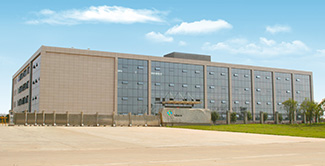
The company covers an area of 280.2 mu, equivalent to 186,800 m2, with a total building area of 129,917 m2 and a building footprint of 51,178 m2. The main construction contents of the project include one office building (including the R&D building, comprehensive service building, shift building, and central control and analysis building), four production workshops (MMT production workshop, high-purity manganese chloride production workshop, carbon monoxide production workshop, and cetane number improver production workshop), oneboiler house, three warehouses, one machine repair workshop and three tank farms, etc.
(2) Construction process and environmental approval situation
The environmental impact assessment report of the Relocation and Expansion Project of Jiangxi Silinco Co., Ltd. was completed by the Jiangxi Provincial Research Institute of Environmental Protection Science. In September 2013, the Nanchang Municipal Environmental Protection Bureau approved the environmental impact assessment report of the Relocation and Expansion Project of Jiangxi Silinco Co., Ltd. through the document Honghuan Approval [2013] No. 242. The project started in 2013, was completed in June 2016 and put into trial operation.During the construction of the project,the company commissioned the Jiangxi Provincial Research Institute of Environmental Protection Science to carry out environmental supervision of the construction project.After the completion of the project, the MMT production process changed compared with the environmental impact assessment. According to the change analysis made by Nanda Ronghui, these changes do not constitute major changes.
(3) Investment situation
The actual total investment of the project is RMB 220 million, of which the environmental protection investment isRMB 10 million, accounting for4.5% of the total investment.
(4) Acceptance scope
This acceptance is limited to the Phase I project only, including 5,000 tons/year of high-purity manganese chloride; 1,500 tons of methylcyclopentadienyl manganese tricarbonyl, 600 tons of carbon monoxide (MMT)raw materials; and 20,000 tons of cetane number improver.
In the environmental impact assessment approval, the 3,000 tons/yearMCPD (with 1,600 tons/year self-use), 40,000 tons of diesel fuel anti-wear agent, 50,000 tons/year of sec-butyl acetate, 2,000 tons/year of ultra-high-purity nickel nitrate, and 5,000 tons/year of refining catalyst are not within the scope of this acceptance.
II. Construction Situation of Environmental Protection Facilities
(1) Wastewater
This project has implemented the separation of rain and sewage. Rainwater is discharged into the municipal rainwater pipe network through the rainwater pipe network. The sewage mainly consists of process wastewater, floor washing water, vacuum pump wastewater and domestic sewage. After collection, the production wastewater and domestic sewage enter the plant wastewater treatment station(oil separation + neutralization and regulation + air flotation + anaerobic + biological contact oxidation + membrane filtration process)for treatment, and are then dischargedinto the park sewage pipe network, and connected to the Baishui Lake Wastewater Treatment Plant through the municipal sewage pipeline.
(2) Waste gas
The flue gas of the boiler and the heat transfer oil furnace is treated by a cyclone dust collector + water-film desulfurization and dedusting device, and then discharged jointly through one 50 m high chimney. The waste gas generated by the reaction kettles in the manganese chloride workshop is treated by absorption with sodium hydroxide + potassium permanganate solution. The spray drying tail gas is discharged through a 25 m high exhaust stack after cyclone dust collection + spray tower treatment.The tail gas of the MMT continuous distillation section is discharged through a 15 m high exhaust stack after condensation treatment. The tail gas during the concentration and reuse of sulfuric acid in the cetane number improver workshop is discharged through a 15 m high exhaust stack after being absorbed by an absorption tower containing urea solution.The odor gas of the wastewater treatment station is discharged through a 25 m high exhaust stack after alkaline spray + photocatalytic + activated carbon adsorption treatment.
(3) Noise
The enterprise selects low-noise mechanical equipment,rationally arranges high-noise equipment,and at the same time adopts measures such as vibration reduction,sound insulation,and sound absorption,and plants trees in the plant area to form a noise control isolation belt, and strengthens management to reduce the impact of noise on the surrounding environment.
(4) Solid waste
All kinds of solid waste are temporarily stored in correspondingtemporary storageplaces, with corresponding treatment facilities adopted, and are all properly disposed of. Among them, the hazardous wastehas been handed over to Jiangxi Dongjiang Environmental Protection Technology Co., Ltd. for disposal; the domestic waste is collected and disposed of uniformly by the sanitation department.
(5) Other environmental protection facilities
1.Environmental risk prevention facilities
Bermsare set around the storage tanks of the project. Beside the wastewater treatment station, an accident emergency pool with a capacity of 1,250 m3and an initial rainwater collection pool with a capacity of 1,250 m3(also used as a fire-fighting wastewater collection pool) are built.
2.Online monitoring devices
The boiler chimney is equipped with waste gas (monitoring factors: flue gas discharge volume, soot,sulfur dioxide, nitrogen oxides, etc.) online monitoring devices and video monitoring devices. The general outlet of the wastewater treatment station is equipped with wastewater (monitoring factors: discharge volume, COD, ammonia nitrogen,pH value) online monitoring devices and video monitoring devices. The wastewateronline monitoring and monitoring devices have been networked with the pollution source online monitoring system of the Nanchang Municipal Environmental Protection Bureau.
IV.Acceptance Monitoring Results
The following results are from the "Completion Environmental Protection Acceptance Monitoring Report of the Relocation and Expansion Project (Phase I) of Jiangxi Silinco Co., Ltd." provided by Jiangxi Huazheng Environmental Technology Co., Ltd.
1.Wastewater
The test results of animal and vegetable oil and anionic surfactants in the wastewater discharged from the general outlet all meet the requirements of the Class I standard in Table 4 of the Integrated Wastewater Discharge Standard (GB8978-1996), and the test results of other monitoring items all meet the influent water quality requirements of the Baishui Lake Wastewater Treatment Plant.
2.Waste gas
①Unorganizeddischargedwaste gas: the test results of particulates, non-methane total hydrocarbons and sulfuric acid mist all meet the unorganized discharge concentration limits in Table 2 of the Integrated Emission Standard of Air Pollutants (GB16297-1996); the test results of ammonia and odor concentration all meet the Class II new-expansion-reconstruction standard in Table 1 of the Emission Standards for Odor Pollutants (GB14554-1993);
②Organizeddischargedwaste gas: the test results of sulfuric acid mist, particulates, non-methane total hydrocarbons and hydrogen sulfideall meetthe standards in Table 2 of the Integrated Emission Standard of Air Pollutants (GB16297-1996); the test results of ammonia and odor concentration all meet the standards in Table 2 of the Emission Standards for Odor Pollutants (GB14554-1993); the test results of boiler flue gas particulates, sulfur dioxide, nitrogen oxides and flue gas blacknessmeet the coal-fired boiler standard in Table 2 of the Emission Standard of Air Pollutants for Boilers (GB13271-2014).
3.Boundary noise
The noise measurement results at the noise monitoring points around the plant boundary all meet the Class 3 standard requirements of the Emission Standard for Industrial Enterprises at Boundary Environment Noise (GB12348-2008).
4.Solid waste
All kinds of solid waste are temporarily stored in correspondingtemporary storageplaces, with corresponding treatment facilities adopted, and are all properly disposed of. Among them, the hazardous wastehas been handed over to Jiangxi Dongjiang Environmental Protection Technology Co., Ltd. for disposal; the domestic waste is collected and disposed of uniformly by the sanitation department.
5.Total pollutant emissions
The annual emissions of chemical oxygen demand,ammonia nitrogen,sulfur dioxideandnitrogen oxides all meet the total amount controlrequirements.
6.Online monitoring situation
The comparison results of the online monitoring devices for flue gas emissions all meet the standard limit requirements in the Technical Specifications for Continuous Monitoring of Flue Gas Emissions from Stationary Pollution Sources (Trial) (HJ/T75-2007), and the comparison results of the online monitoring devices for wastewater discharge meet the standard limit requirements in the Technical Specifications for Acceptance of Online Monitoring System for Water Pollution Sources (Trial) (HJ/T354-2007).
V. Acceptance Conclusion
The project has complete environmental protection procedures and has basically implemented the various environmental protection measures and requirements stipulated in the environmental impact assessment and its approval. The completion acceptance monitoring conditions comply with the relevant provisions of the Interim Measures for the Acceptance of Completed Construction Projects for Environmental Protection. The environmental protection facilities operate normally, the main pollutants are discharged up to the standards, and the wastewater and waste gas pollutant emissions meet the total amount control index requirements. The acceptance group considers that,on the premise of implementing the following rectification contents, it agrees in principle to pass thecompletionenvironmental protection acceptance of the project.
VI. Acceptance Suggestions
1. Strictly implement various environmental management systems, standardize the operation of environmental protection facilities, improve the collection, daily inspection and necessary monitoring of wastewater, waste gas, solid waste, etc. during the operation period, improve and perfect the daily operation, maintenance, management and ledger records of production devices and environmental protection facilities, ensure the long-term stable discharge of various pollutants up to the standards, and eliminate leakage, dripping and accidental discharge.
2. Perfect the filing procedures for the environmental impact assessment changes.
3. In accordance with the environmental management requirements, standardize the identification and description of various equipment and conveying pipelines, and the identification signs of pollution sources such as wastewater, waste gas, noise, hazardous chemicals and solid waste.
4. Further improve the construction of the rain and sewage separation facilities in the plant area. The wastewater in the accident pool should promptly enter the plant wastewater treatment station for treatment and then be discharged up to the standard.
5. Further improve the acceptance monitoring report, including the comparison between the actual construction content and the environmental impact assessment and its approval, verify whether the environmental sensitive targets around the project have changed; verify the project overview (including the basic information table, environmental protection investment, production equipment, environmental protection facilities, utility engineering, etc.); supplement the table of wastewater volume and total pollutant emission accounting results in the monitoring report.
6. Perfect the geographical location map of the construction project; the plane layout map of the plant area(which should indicate the location of the production area, the location of the wastewater discharge outlets, the plant boundary and the surrounding environment, etc.); the rainwater and sewage pipe network maps within the plant; the material, fuel and actual water balance diagrams; the production process flow and pollution generation schematic diagram, the pollution treatment process flow diagram, etc.
Publicity period: March 10, 2018 --- April 10, 2018
Jiangxi Silinco Co., Ltd.
March 10, 2018