In accordance with the Law of the People's Republic of China on Environmental Impact Assessment, the provisions of the Regulations on the Administration of Environmental Protection for Construction Projects (State Council Order No. 253), and the requirements of the Interim Measures for Public Participation in Environmental Impact Assessment (SEPA Huanfa 2006 [No. 28]), the relevant information on the 1,000 t/a Manganese Chloride Project of Jiangxi Silinco Industrial Co., Ltd. is hereby made public as follows:
I. Name and summary of the construction project
Name of the construction project: the 1,000 t/a Manganese Chloride Project of Jiangxi Silinco Industrial Co., Ltd.
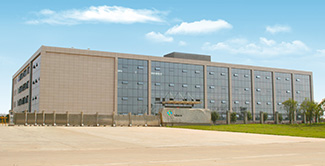
Geographical location of the construction: No. 1299 Yuping West Street, Nanchang National Economic and Technological Development Zone.
Construction scale and content: Jiangxi Silinco Industrial Co., Ltd. was established in 2004 and has been dedicated to the R&D, production and sales of special petroleum processing chemicals such as the gasoline antiknock agent Methylcyclopentadienyl Manganese Tricarbonyl (MMT). The existing project has an annual MMT production capacity of 500 tons. Because the purity of the purchased raw material anhydrous manganese chloride cannot be guaranteed, which greatly affects the production cost of MMT, the company decided to put its independently developed anhydrous manganese chloride production process into operation. The expansion is to build a new 1,000 t/a anhydrous manganese chloride production unit and corresponding supporting facilities on the basis of the existing project. Construction content: (1) Build a new manganese chloride production unit with an annual output of 1,000 tons; (2) Increase warehousing capacity; (3) Expand and renovate public utilities and related production facilities.II. Name and contact information of the project construction unit
Project construction unit: Jiangxi Silinco Industrial Co., Ltd.Address: No. 1299 Yuping West Street, Nanchang National Economic and Technological Development Zone
Contact person: Xiao Zhongmin Contact phone: 13732997860
III. Name and contact information of the environmental impact assessment institution undertaking the assessment
Environmental impact assessment institution: Nanchang University
Address: Nanchang University, No. 235 Nanchang East Road, Qingshanhu District, Nanchang, Jiangxi Province
Contact person: Wan Jinbao Email: jbwan@ncu.edu.cn
IV. Environmental impact analysis and main pollution prevention and control measures The wastewater discharged by this project mainly consists of production wastewater from the MMT and manganese chloride production processes, equipment and floor flushing wastewater, initial rainwater and domestic sewage. Except for evaporation losses, the water-washing and alkali-washing wastewater from the CO purification process, dust removal water, steam condensate and desalted water from soft water preparation are all recycled. After the wastewater discharged from the plant is treated by the in-plant sewage treatment station through the process of “regulating tank → coagulation sedimentation → ABR reactor → biological contact oxidation → air flotation tank → activated carbon” to meet the acceptance standard, it flows through the development zone sewage pipe network into the Honggutan Sewage Treatment Plant, where it is treated to meet the Class I B standard of the Pollutant Discharge Standard for Urban Sewage Treatment Plants (GB18918-2002), and is finally discharged into the Ganjiang River. The solid waste discharged by this project mainly comes from general industrial solid waste, domestic garbage and biochemical sludge. Among them, general solid waste mainly includes salt-containing waste residue, ash residue, furnace slag and coal cinder generated by the MMT unit, manganese chloride unit, diether unit, CO generation unit and boiler unit, which can be landfilled, used for road paving or sold to cement plants for treatment. Domestic garbage and biochemical sludge are sent to landfills for treatment. The residual liquid generated in production mainly contains cyclopentadiene polymers, which can be burned together with coal as fuel to generate water and carbon dioxide, and can be sold externally or incinerated internally. The waste gas generated by this project mainly consists of production waste gas and boiler flue gas. Production waste gas mainly consists of water vapor, hydrogen and fugitive non-methane total hydrocarbon gas, which has relatively little impact on the environment. The boiler flue gas is treated by an HJC dust removal and desulfurization system to meet the Class II area, Phase II period standard of the Emission Standard of Air Pollutants for Boilers, and is discharged through aV. Working procedures and main work content of the environmental impact assessment
1. Working procedures
① Preparation stage: study relevant documents, conduct an investigation of the current environmental status, screen key assessment items, and determine the assessment work grade.
② Formal work stage: further carry out engineering analysis and current status investigation, and conduct environmental impact prediction and assessment.
③ Report preparation stage: compile materials and data, propose environmental protection measures and suggestions, draw conclusions, and complete the report preparation.
2. Main work content
① Engineering analysis: introduce the project overview, the environmental overview of the project construction site and environmental protection objectives, and the current environmental quality, analyze the environmental impacts of each stage during the project implementation at different periods and their assessment, and propose environmental protection suggestions and measures.
② Consistency analysis with relevant plans: analyze the opinions of governments at all levels, planning and environmental protection departments where the project is located, and whether environmentally sensitive areas such as urban planning zones, densely populated residential areas, ecologically fragile zones and scenic spots have been avoided.
③ Current environmental quality: in accordance with the requirements of national laws and regulations, monitor and evaluate the current environmental quality of the project construction area.
④ Environmental impact prediction: predict the main environmental factors of the construction project and evaluate the prediction results.
⑤ Public participation: adopt public participation methods such as environmental information announcements and public opinion surveys, carry out public participation, reflect the feedback of public participation in the EIA, and give conclusions on whether to adopt or not adopt it.
⑥ Propose the environmental impact assessment conclusion: on the basis of the aforementioned work, propose the EIA conclusions.
VI. Main matters for soliciting public opinions
(1) Are you aware of this project?
(2) What do you think are the benefits of building this project?
(3) During the construction period, what environmental issue of this project construction are you most concerned about?
(4) During the operation period, what environmental issue of this project construction are you most concerned about?
(5) How do you think this project will affect the environment?
(6) What do you think of the current environmental conditions in the local area?
(7) Do you agree with the construction of this project?
(8) What suggestions and requirements do you have regarding the environmental protection of this project and the approval of the project by the competent administrative department for environmental protection?VII. Main ways for the public to raise opinions
The public may raise opinions and suggestions to the construction unit and the environmental impact assessment unit by telephone, fax, letter, email, filling in the public participation survey form, and other means.
Construction unit: Jiangxi Silinco Co., Ltd.
EIA unit: Nanchang University